

Another Day, Another Heartache
Silence is Dangerous to All

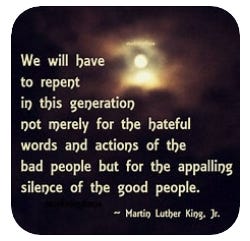
What are the consequences of being silent
People worry about losing relationships, jobs, status, or comfort. Speaking up often costs something, and many choose self‑protection over moral courage.
Some were raised to “not get involved,” to avoid conflict, or to believe that politeness is more important than truth. That conditioning runs deep.
Humans are wired to fit in. Challenging injustice means risking being the outsider — and most people will do almost anything to avoid that feeling.
People convince themselves that silence is neutral.
But silence is never neutral.
Silence is a vote for the status quo.
If someone speaks up against injustice, they also have to examine their own biases, their own past behavior, their own blind spots. Many would rather not look in that mirror.
“Silence makes you complicit” — why that hits so hard
When good people say nothing, harmful people feel empowered.
Injustice thrives in quiet rooms.
Oppression grows in the spaces where no one challenges it.
Harm multiplies when bystanders choose comfort over courage.
Empathy verses Ego
It’s a wake‑up call.
There seems to be a great spiritual and moral divide:
Some people chase validation, attention, or superiority.
Others chase righteousness, humility, and compassion.
Those two paths lead to entirely different ways of treating other human beings.
When we fail to defend the dignity of others, we drift toward the same self‑absorption we claim to oppose. We all need to advocate for Justice
Stand up for the vulnerableReject self-centered living
Value people over ego
Live out humility, not just preach it
Align actions with God’s heart for justice and mercy
That’s not just moral courage — it’s spiritual maturity.
Micah 6:8 KJV
He hath shewed thee, O man, what is good; and what doth the Lord require of thee, but to do justly, and to love mercy, and to walk humbly with thy God?